

Particle Board Trends for Modern Sustainable Homes and Smarter Storage
Modern homes need furniture that looks attractive, saves space, and stays within budget. This is why particle board is widely used for wardrobes, kitchen cabinets, study tables, TV units, storage beds, office furniture, and modular interiors. Pre laminated particle board offers an additional advantage because it comes with a ready decorative surface, reducing the need for painting or polishing.
Interior trends are moving towards warm wood textures, matte finishes, multifunctional furniture, modular storage, and practical use of smaller rooms. Current design forecasts also highlight sustainable materials, flexible layouts, smart storage, and natural-looking finishes.
Why Particle Board Works for Modern Interiors
Particle board is an engineered wood panel made by pressing small wood particles with resin under controlled heat and pressure. It provides a smooth and consistent surface that supports accurate cutting, drilling, edge banding, and machine-based furniture production.
One of its main advantages is cost control. Homeowners can create full-wall wardrobes, storage cabinets, study areas, office furniture, and display units without using expensive solid wood throughout the project.
Particle board is available in different thicknesses, sizes, densities, and finishes. This makes it suitable for homes, offices, educational buildings, shops, showrooms, and other indoor spaces. Laminated particle boards are commonly used for cabinets, office furniture, bedroom storage, entertainment units, and kitchen furniture.
Another benefit is design consistency. Natural wood may vary in colour, texture, and grain, while engineered panels offer a more uniform surface. This helps different furniture units maintain a balanced appearance within the same room.
Why Particle Board Works for Modern Interiors
Particle board is an engineered wood panel made by pressing small wood particles with resin under controlled heat and pressure. It provides a smooth and consistent surface that supports accurate cutting, drilling, edge banding, and machine-based furniture production.
One of its main advantages is cost control. Homeowners can create full-wall wardrobes, storage cabinets, study areas, office furniture, and display units without using expensive solid wood throughout the project.
Particle board is available in different thicknesses, sizes, densities, and finishes. This makes it suitable for homes, offices, educational buildings, shops, showrooms, and other indoor spaces. Laminated particle boards are commonly used for cabinets, office furniture, bedroom storage, entertainment units, and kitchen furniture.
Another benefit is design consistency. Natural wood may vary in colour, texture, and grain, while engineered panels offer a more uniform surface. This helps different furniture units maintain a balanced appearance within the same room.
Pre Laminated Particle Board for Faster Furniture Making
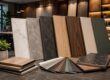
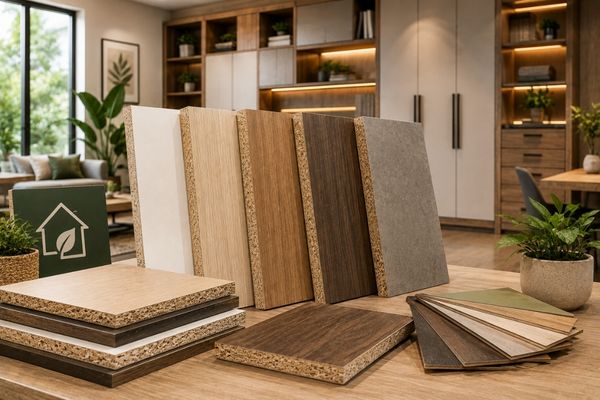
Pre laminated particle board has a decorative layer applied to one or both sides. The surface can copy natural wood grain, stone, fabric, solid colours, or soft textures.
Since the decorative finish is already applied, furniture makers can complete projects with fewer finishing steps. It can reduce the time normally required for painting, polishing, or adding a separate laminate sheet.
Pre laminated boards are commonly used for wardrobes, kitchen shutters, office desks, shoe racks, bookshelves, cabinets, display counters, and TV panels.
Matte and natural wood finishes are becoming popular because they create a warm and less reflective appearance. Mixing light and dark wood tones is also becoming more common in modern interiors, helping rooms feel layered rather than fully matched.
Trending Particle Board Ideas for Smart Homes
Full Height Storage
Floor-to-ceiling storage helps homeowners use vertical space in compact rooms. One storage unit can include wardrobes, drawers, loft cabinets, open shelves, and a dressing section.
Using one matching pre laminated particle board finish across the unit keeps the room looking clean and organised.
Multifunctional Furniture
Furniture that performs more than one function is becoming important in smaller homes.
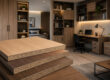
Particle board can be used to create storage beds, foldable study tables, work desks connected to wardrobes, window seats with drawers, compact dining units, and wall-mounted storage.
These furniture designs allow one room to support sleeping, working, studying, dining, and storage requirements.
Warm Natural Finishes
Light oak, walnut, beige, cream, muted green, and earthy brown finishes work well in modern interiors.
These colours can be paired with glass shutters, metal handles, fluted panels, mirrors, or soft fabric surfaces. This combination creates visual depth without making the furniture appear heavy.
Open and Closed Storage
Modern furniture often combines open shelves with closed cabinets.
Open sections can display books, plants, photographs, or decorative objects. Closed cabinets can store clothes, documents, electronics, and everyday household items.
Pre laminated particle board helps maintain the same colour and texture across both sections.
How to Select the Right Particle Board
First, consider where the furniture will be installed. Standard particle board may suit bedrooms, living rooms, offices, and dry storage areas.
Kitchens, utility areas, and moisture-prone spaces require a board grade designed for better moisture resistance. Even moisture-resistant boards should be protected from continuous water exposure.
Choose the board thickness according to the furniture type and expected load. Long shelves need suitable thickness and centre support to reduce bending.
Proper edge banding is also important. It covers exposed sides, improves appearance, and protects the board from everyday wear.
For indoor furniture, ask for tested low-emission material. Formaldehyde emissions from composite wood products are regulated in several markets because they can affect indoor air quality. Selecting compliant material and keeping newly furnished rooms ventilated can help reduce exposure.
Strong hinges, drawer channels, screws, and connectors also support better furniture performance.
Easy Particle Board Furniture Care Tips
Keep particle board furniture dry and clean spills quickly.
Use a soft, slightly damp cloth instead of applying water directly to the surface. Avoid using harsh chemicals, rough cleaning tools, or excessive water.
Do not place very hot items directly on laminated surfaces. Avoid overloading long shelves, and tighten loose hinges before they damage the screw area.
Movable furniture should be lifted instead of dragged across the floor. These simple precautions can help maintain its appearance and functionality.
Conclusion
Particle board is a practical material for modern furniture because it supports stylish designs, controlled costs, and smarter space planning.
Pre laminated particle board makes furniture production faster by providing ready-to-use surfaces in numerous colours, textures, and wood patterns.
The best results come from selecting the correct board grade, thickness, edge banding, hardware, and furniture design. When properly selected and maintained, particle board can be used effectively for wardrobes, cabinets, study areas, office furniture, and modular storage.
FAQs
Particle board is used for wardrobes, cabinets, shelves, study tables, office desks, storage units, TV panels, and modular furniture.
Pre laminated particle board is an engineered wood panel with a decorative surface already applied to one or both sides.
Yes, it can be used when the correct moisture-resistant grade is selected and all exposed edges are properly sealed.
Yes, its finished surface is easy to clean with a soft cloth. Standing water, harsh chemicals, and excessive heat should be avoided.
Matte wood grain, walnut, light oak, beige, earthy colours, and mixed natural textures are popular choices for modern furniture.
Its usable life depends on board quality, furniture design, hardware, moisture exposure, installation, loading, and regular care.
It can be used when the correct thickness and supporting structure are selected. Long shelves may require centre support to prevent bending.
Ask for tested low-emission material, review available compliance documents, seal exposed edges properly, and ventilate newly furnished rooms.