

Laminated Particle Boards for Modern Interiors
In modern interior design, furniture and fittings must meet the demands of durability, style, and cost-effectiveness. Laminated particle board (LPB) has emerged as a leading material for creating functional and aesthetically pleasing furniture for homes, offices, and commercial spaces.
By combining engineered wood strength with laminated finishes, LPB delivers smooth surfaces, superior durability, and a premium look without the high cost of solid wood. In this blog, we explore why laminated particle board is a game-changer for modern interiors.
What Is Laminated Particle Board?
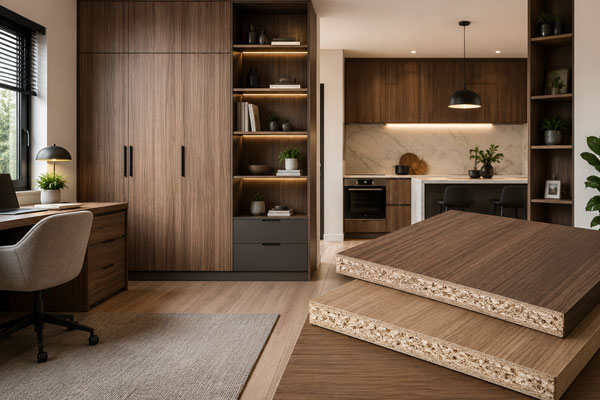
Laminated particle board is an engineered wood product made from wood chips, sawdust, and resin, pressed together to form a dense, flat panel. A laminate layer is applied on the surface to provide a decorative finish, moisture resistance, and added durability.
Key Features:
- Smooth Surface: Ideal for laminates, veneers, or paint.
- Durable Core: Engineered for structural stability.
- Cost-Effective: Provides a premium appearance at a fraction of solid wood costs.
- Eco-Friendly: Made from recycled wood and industrial by-products.
Advantages of Laminated Particle Board
Applications of Laminated Particle Board
Home Interiors
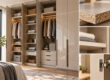
- Wardrobes, kitchen cabinets, TV units, and study tables
- Provides a modern look with durable construction.
Office Furniture
- Desks, workstations, conference tables, and storage cabinets
- Supports modular designs and high usage in commercial spaces.
Retail and Commercial Interiors
- Display shelves, counters, and shop fixtures
- Can handle moderate wear while maintaining visual appeal.
Modular and Ready-to-Assemble Furniture
- Pre-laminated particle boards are ideal for flat-pack furniture, offering ease of assembly and consistent quality.
Types of Laminated Particle Board
| Type | Features | Typical Use |
|---|---|---|
| Standard Laminated Particle Board | Smooth, laminated finish | Home furniture, cabinets |
| Moisture-Resistant LPB | Treated for humidity | Kitchens, bathrooms |
| High-Density Laminated Board | Stronger, supports heavy loads | Office desks, shelving |
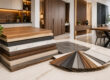
| Decorative Laminated Board | Pre-laminated with patterns or colors | Modern interior furniture, panels |
Maintenance and Best Practices
Avoid Water Contact: Wipe spills immediately to prevent swelling.
Use Soft Cleaning Materials: Avoid abrasive cleaners to preserve laminate.
Apply Protective Pads: Use coasters, mats, or padding for heavy objects.
Check Screws and Fasteners: Ensure joints remain tight to maintain structural stability.
Avoid Direct Sunlight: Prolonged exposure may cause fading of laminated surfaces.
Advantages Over Solid Wood
| Feature | Laminated Particle Board | Solid Wood |
|---|---|---|
| Cost | Affordable | Expensive |
| Surface Uniformity | Smooth and consistent | Can have knots and irregularities |
| Weight | Lightweight | Heavier |
| Eco-Friendliness | Made from recycled wood | Uses fresh timber |
| Machinability | Easy to cut and shape | Requires more effort and tools |
Observation: Laminated particle board offers affordable, stylish, and eco-friendly alternatives to solid wood, making it ideal for modern interiors.
FAQs About Laminated Particle Board
Yes, moisture-resistant LPB is suitable for cabinets, countertops, and storage units.
With proper handling and lamination, it can last 10–15 years or more.
Yes, laminates are available in variety of colors, textures, and patterns for personalized designs.
Yes, it uses recycled wood chips and industrial by-products, reducing deforestation and environmental impact.
Clean with soft cloth and mild detergent; avoid sharp objects and abrasive materials.
Conclusion
Laminated particle board is revolutionizing home and office interiors by offering a perfect combination of strength, style, and affordability. Its smooth laminated surface, durability, and eco-friendliness make it a preferred choice for modern furniture, cabinets, and modular designs.
Whether for wardrobes, desks, shelves, or kitchen cabinets, laminated particle board allows designers and homeowners to achieve premium aesthetics without the high cost of solid wood, making it an essential material in contemporary interior design.